 ™
Paper weight (GSM) by use
| GSM | Typical use | Approx. load |
|---|---|---|
| 40–60 | Pharmacy, bakery and small SOS bags | Up to 1–2 kg |
| 70–90 | Takeaway, fashion and small retail handle bags | 2–5 kg |
| 100–120 | Grocery and supermarket bags | 5–8 kg |
| 130–150 | Heavy retail and bottle bags | 8–12 kg |
| Art paper 157–250 + lamination | Premium brand and gift bags | Depends on handle and reinforcement |
Loads are a guide only; bag size, gusset, handle and reinforcement patches also affect strength. We test-fill samples on request.
Paper types
- Brown kraft: strongest per GSM, natural look, lowest cost.
- White kraft: clean surface for bright print.
- Coated art paper: smooth surface for photographic print, usually laminated for premium bags.
- Grease-resistant paper: for oily food and takeaway.
Handle types
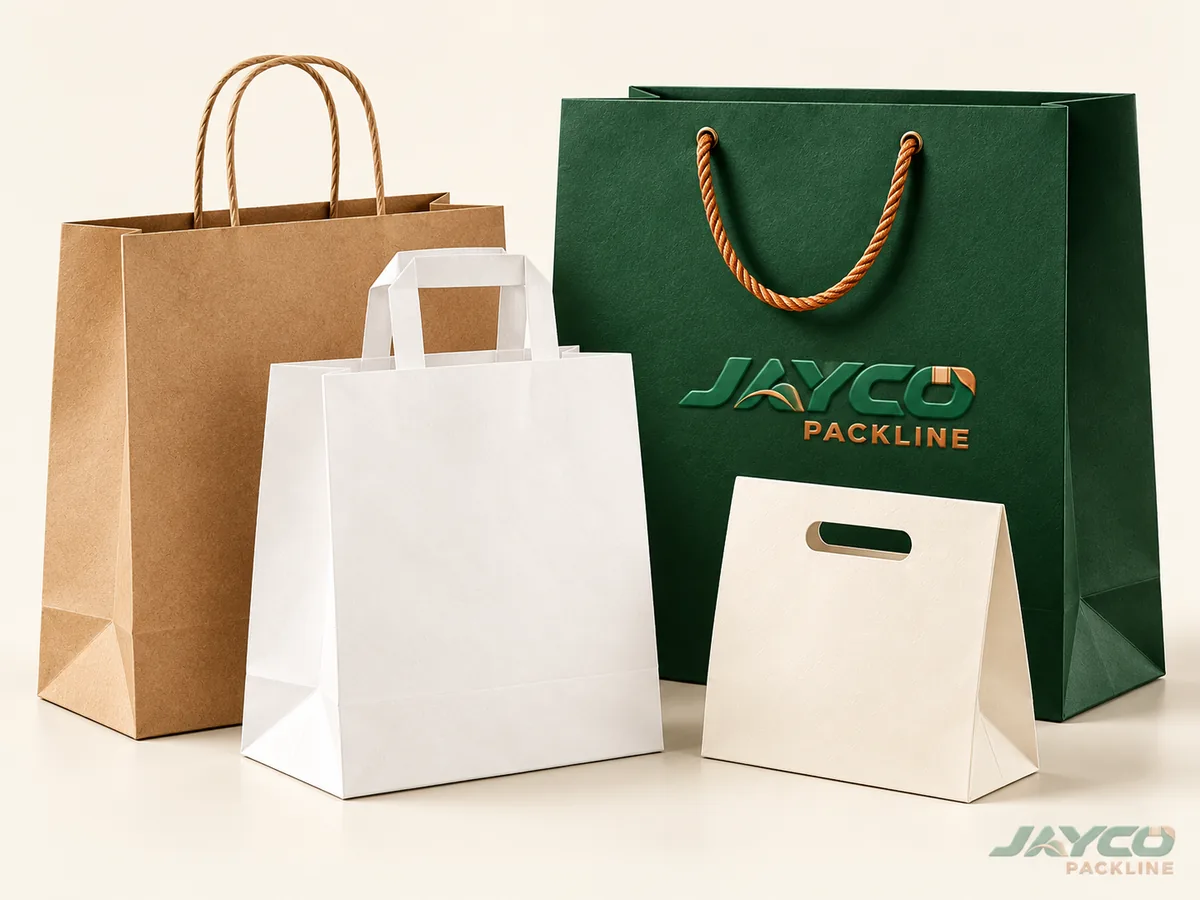
- Twisted paper handle: comfortable, strong, the most common retail handle.
- Flat tape handle: economical, good for grocery and takeaway.
- Rope or ribbon handle: premium and gift bags.
- Die-cut handle: handle hole punched in the bag, for light and promotional bags.
- No handle (SOS): self-opening square-bottom bags for food and pharmacy.
How to measure and specify a bag
Give the size as width × gusset × height in millimetres, for example 260 × 120 × 340 mm. Add the paper type and GSM, handle type, print colours and quantity. If you are replacing a plastic bag, send its size and the heaviest load it carries.
Packing and container loading
Bags are counted into bundles of 25, 50 or 100, shrink-wrapped and packed in export cartons. Ask how many bags fit in a 20 ft or 40 ft container to compare freight cost per thousand bags.