 ™
Ply: how many layers
| Board | Construction | Typical use |
|---|---|---|
| 3-ply (single wall) | 2 liners + 1 fluted layer | Light goods, retail shippers, e-commerce, up to about 5 kg |
| 5-ply (double wall) | 3 liners + 2 fluted layers | Most export cartons, about 5–20 kg, palletised loads |
| 7-ply (triple wall) | 4 liners + 3 fluted layers | Heavy engineering parts, bulk goods, high stacks |
Flute types
- E flute (about 1.5 mm): thin, smooth, good for printed retail boxes.
- B flute (about 3 mm): good crush resistance, common outer layer.
- C flute (about 4 mm): better cushioning and stacking.
- BC double wall: B and C combined, the standard export carton board.
Liner paper and GSM
Liner GSM and paper quality decide much of the box strength. Kraft liners of 120 to 250 GSM are common; virgin kraft is stronger than recycled liner of the same weight. For a fair comparison, ask suppliers for the full board build (for example 5-ply, BC flute, 150/120/120/120/150 GSM) rather than the ply alone.
Humidity and sea freight
Corrugated board loses a large part of its stacking strength in high humidity, which is common in containers crossing tropical seas. For long voyages choose a stronger board than for domestic use, keep cartons palletised and wrapped, and use desiccant in the container if the goods are moisture-sensitive.
Box styles
- RSC (regular slotted carton): the standard, most economical shipping box.
- Die-cut: precise shapes, mailers and boxes with locking tabs.
- Telescopic: separate lid and base for tall or heavy items.
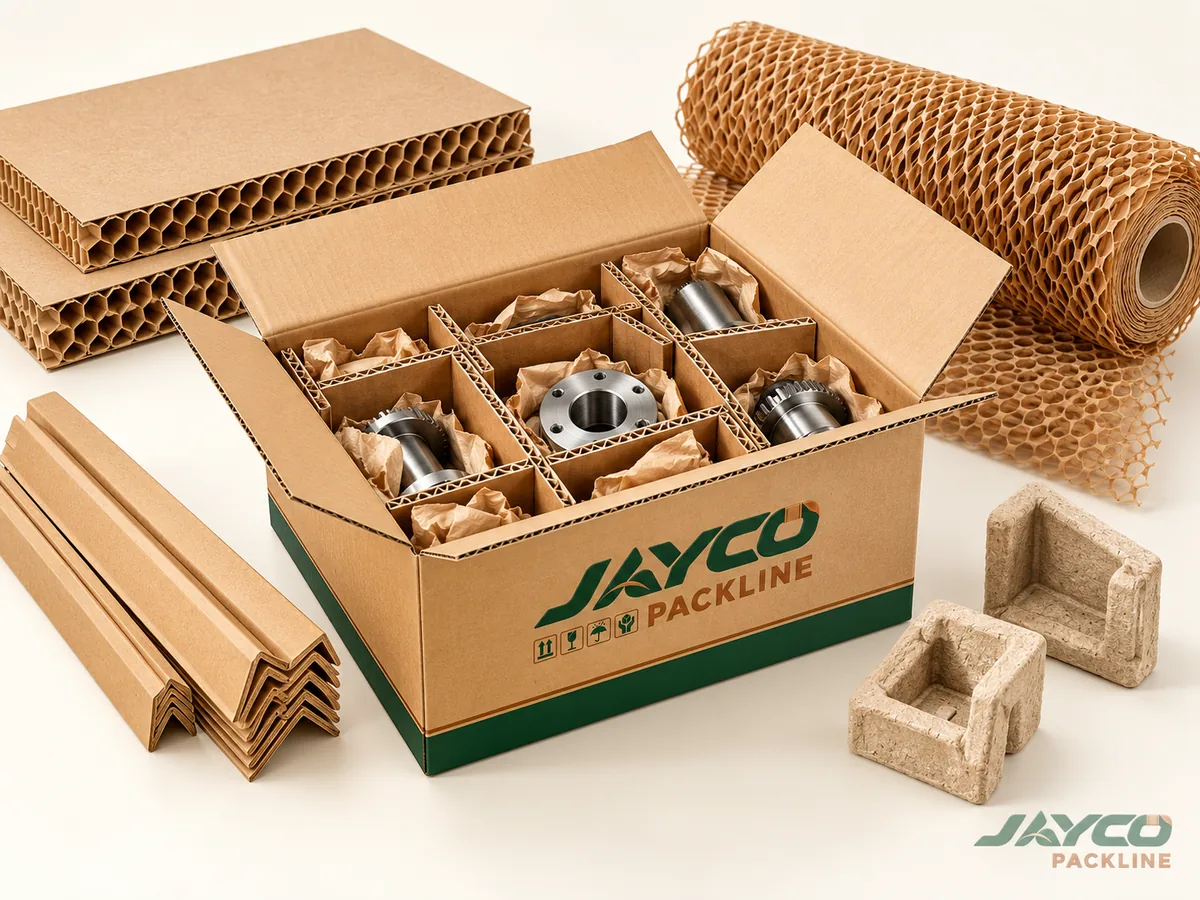
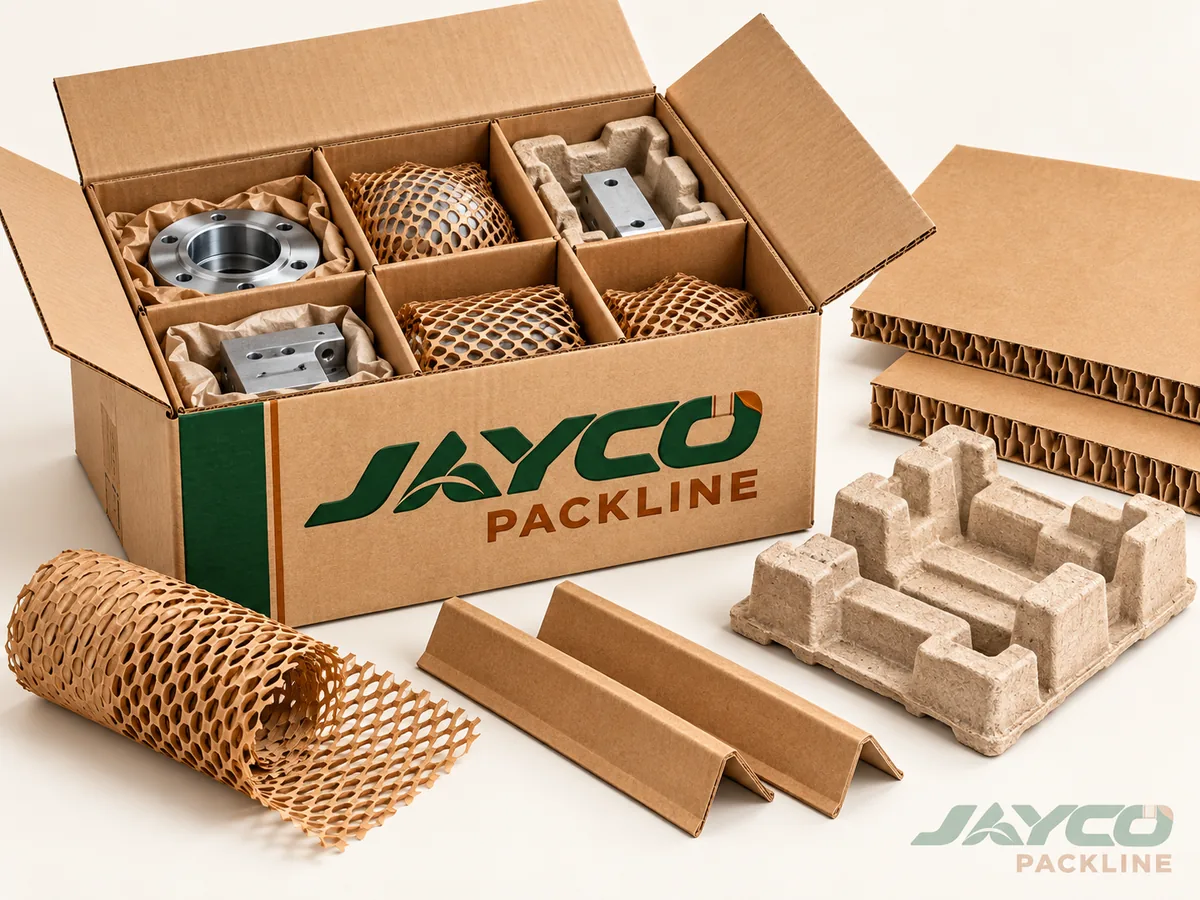
- Partitioned: dividers for bottles, ceramics and parts.